If you read my last Romania post ‘Dracula: Romania’s National Hero’, you will already realise that finding Dracula was high on my agenda when I visited Romania, but it didn’t take long for me to realise that he is harder to find than you might think.
Bran Castle—a fortress built atop a mountain near Brasov—is often marketed as ‘Dracula’s Castle’, yet this title is misleading. Impressive as the castle is, there is no evidence to link Stoker to Bran, and Tepes himself is only rumoured to have spent one night there. According to Bran’s own website, the castle became known this way 30 years ago when American tourists, unable to distinguish between the historical character of Tepes and the fictitious vampire from Stoker’s novel, began to use the nickname ‘Dracula’s Castle’ to describe Bran.
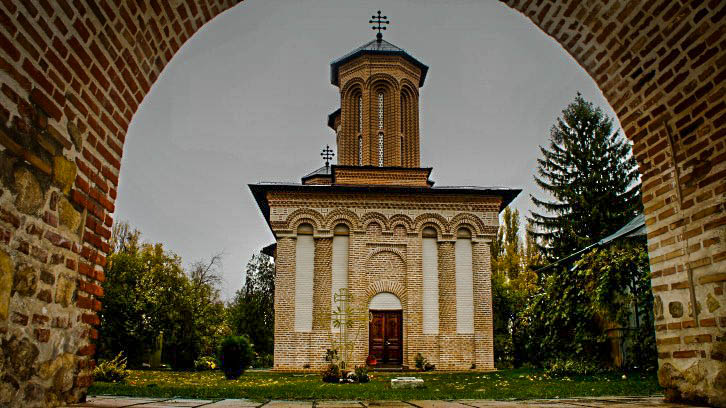
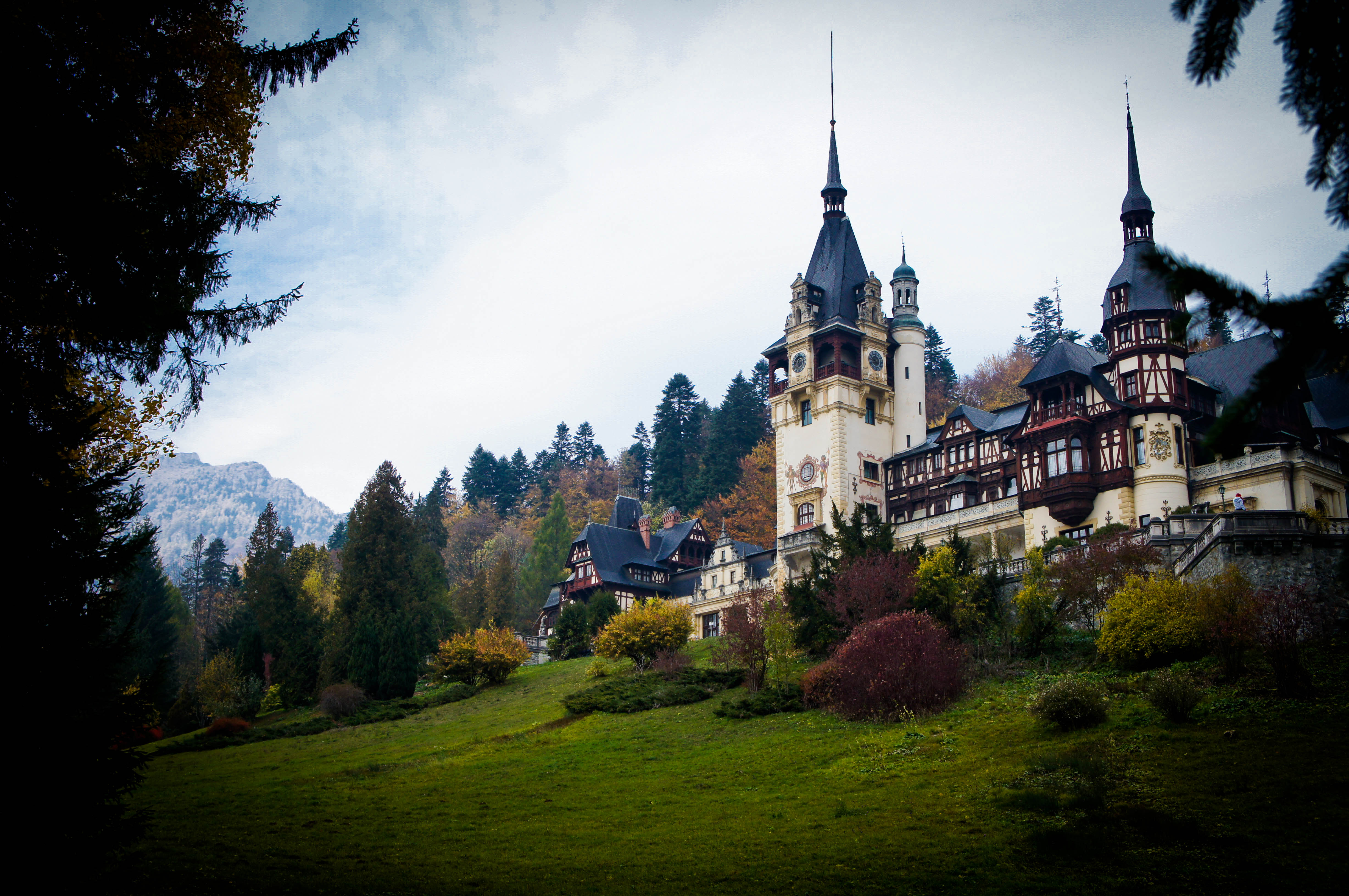
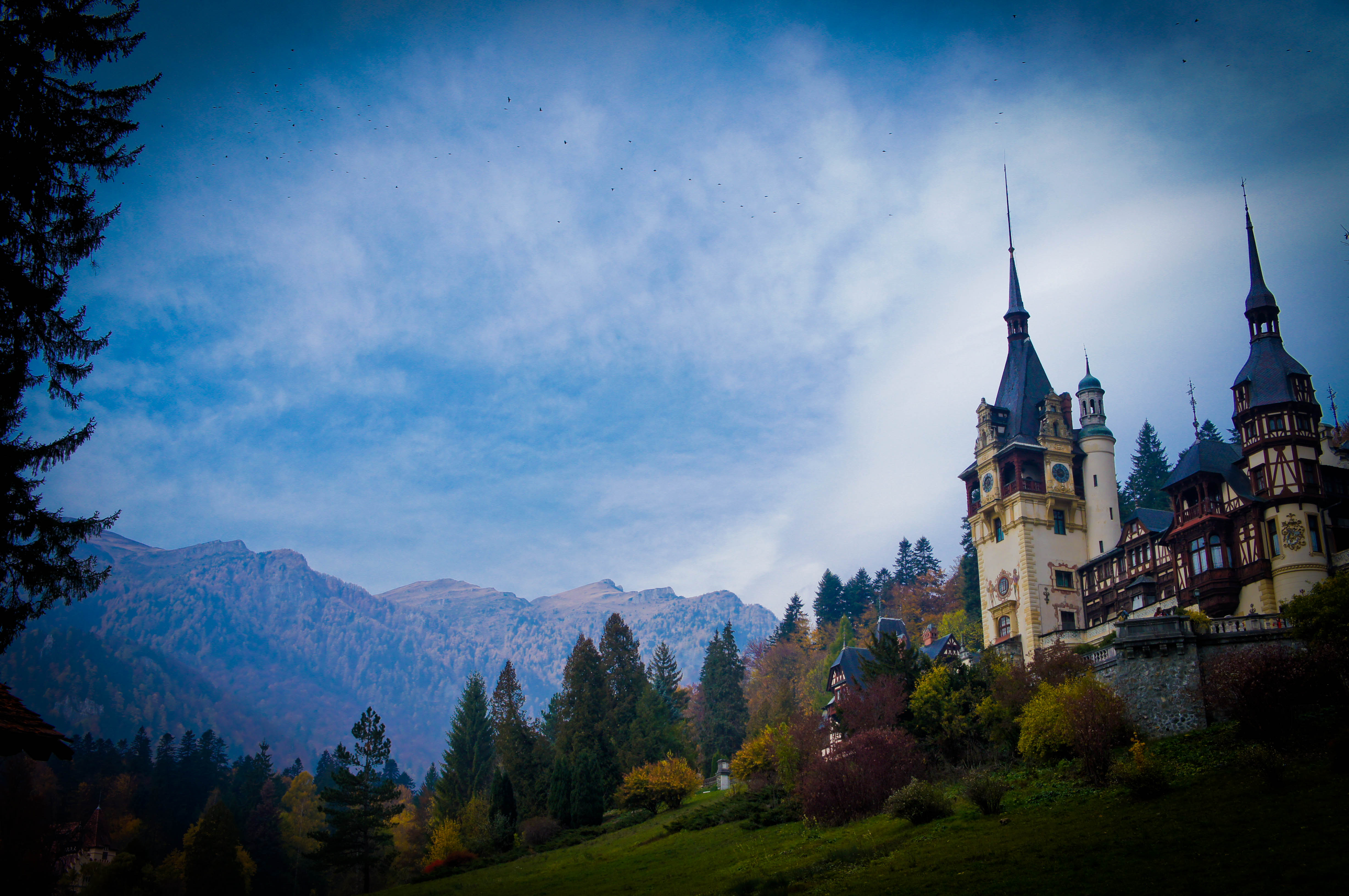
As my time in Romania was short, and I had already visited the spectacular Peles Castle in Sinaia, which, with its sharp turrets and leering gargoyles could itself be Dracula’s Castle, I decided that I would visit Snagov Monastery instead of Bran.
Snagov’s monastery was funded in part by Tepes, frequented by him often, and is said to be one of two possible final resting places of the Impaler. According to legend, Tepes was murdered in the forests surrounding Snagov, and his headless corpse (the head was sent to the Sultan of Turkey to prove his death) now lies underneath the atrium of the monastery.
Despite its close proximity to Bucharest, Snagov Monastery is surprisingly difficult to get to. You can take a metro to Aviatorilor and then a bus to Snagov, but you will need to walk a further 1.5km to reach the monastery. Romania is a safe country, so it wasn’t the thought of the walk, but the freezing rain that caused me to rule out this option. I found a few tours that I could have joined, but €109 seemed an overly steep price to pay.
Instead I contacted Alex, a taxi driver who was willing to take me out to the monastery and back for around €44. This is still rather expensive for a trip that took less than 2 hours, but Alex spoke excellent English, was friendly and informative, and was able to translate for me when I reached the monastery so he became my own personal tour guide.
On the way to Snagov, Alex pointed out landmarks and chatted easily about his country; we spoke in length about Romania before and after the revolution in 1989. He had never visited Snagov before, so he had researched the island and the monastery before picking me up. He was amused by my desire to visit such a tiny place, yet was eager to share his research with me.
Like many other Romanians, he told me that Vlad Tepes was a good man and that foreigners’ desire to link him to the Dracula myth surprises him.
We stopped in a tiny hamlet where we had to wait for a horse dragging a heavy cart to plod slowly past before we could proceed across a large metal bridge that looked completely out of place in such a rural environment. The rain had turned to a light drizzle, yet the leaden sky hung heavily and the wind was biting. For any other trip the weather would have been a dreadful disappointment, but it seemed just right for a trip to Dracula’s grave on the eve of Hallowe’en.
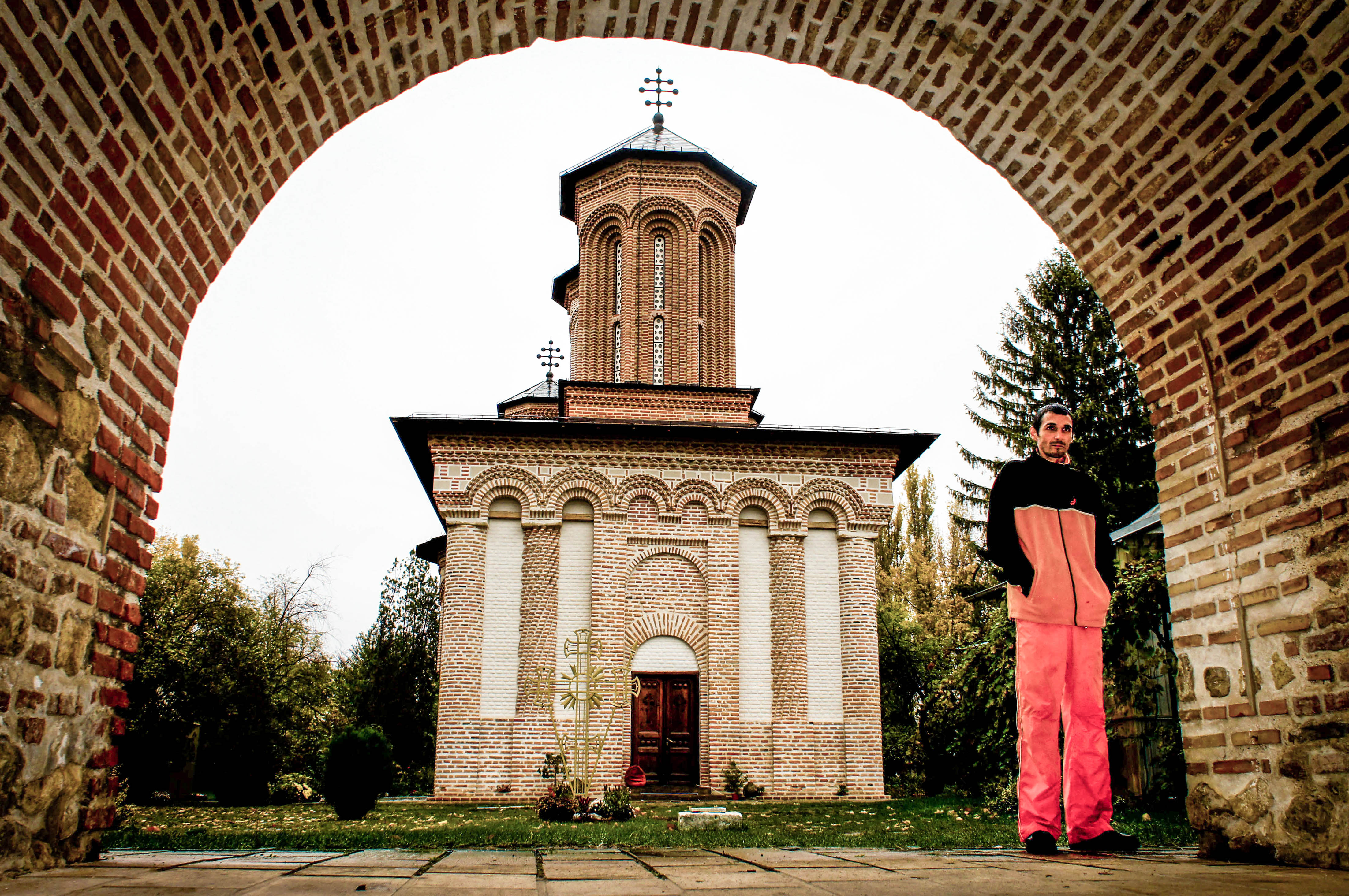
The monastery stands at the centre of the tiny island and seems peaceful and remote. It is not grand like the sort of place you would expect to hold the body of a man who successfully fought the most powerful Empire in the world. Neither is it dark and creepy like the sort of place you would expect to hold the body of a vampire.
As we approached, a woman rushed before us to unlock the doors, she clutched a newspaper over her head to stave off the rain—we were clearly the only visitors she had received that day (perhaps even for many days). I paid 15 Lei to go inside. Alex came in with me and translated between the lady and myself. As I was the only visitor, I could benefit from a personal tour. I didn’t pay the €20 fee to take pictures inside because, to be honest, there was nothing that spectacular to photograph. Peeling frescoes of Basarab, another Wallachian prince, adorned the walls, and the tomb of Vlad III was a simple slab of stone lying in the floor by the altar. The lady explained that Vlad had requested to be buried where the priest would walk over his tomb to approach the altar. There was a small picture of him and a candle to mark the grave.
Unless you have a deep interest in European history, or tenuous links to Gothic literature, Snagov is not really a place you should feel you have to visit—certainly not in winter anyway. But if, like me, you are fascinated by Central European history and the myth of the vampire then it’s worth the trip if you have a couple of hours spare.
If you are interested in the tale of Snagov, you should read ‘The Historian’ by Elizabeth Kostova, this is the novel that inspired me to visit this monastery.
You are just going to HAVE to return 🙂
Maria recently posted..21 Linear Feet
I would absolutely love to 🙂
I think it sounds like a fascinating place! I’m currently reading The Historian which deals with Dracula, and I’ve been hooked on the book for the past few days. And you’re right, the monastery looks exactly like the sort of place where one could picture him residing!
Audrey | That Backpacker recently posted..What does Christmas in Korea look like?
I read The Historian a few years back – it’s the sole reason I visited Snagov! Such an amazing book 🙂
Between Peles and Bran, you have made the right choice 😉 I am glad you liked my country 😉
Oana recently posted..Prima intalnire
It’s good to hear that! I am sure that I will return and see Bran at another time, but it’s good to know I made the right choice this time around!